
HARD VS SOFT MAGIC SYSTEMS
Has magic lost its, well, magic?

There has been a fascinating paradigm shift in recent years. Fantasy literature is moving away from what is now called “soft magic” and onto “hard magic”.
The difference is simple: hard magic systems are quantifiable in some way, whether by numbers and stats, or by resources and rituals. Hard magic systems clearly define the capabilities of magic users.
It’s easy to see why this has become popular. Apart from the obvious influence of table top and video-game RPGs, which are becoming more and more mainstream, hard magic systems offer a host of narrative benefits. For a start, it allows fantasy authors to avoid deus ex machina type solutions to narrative problems. With spellcasters in hard magic systems, we know what they can and can’t do. We know their limits as well as their strengths.
And limitation can become a form of creativity. Given a defined framework, it then poses interesting challenges for a writer. How might a frostmage defeat a firemage knowing that their spells are largely ineffective against fire? How might a level 1 mage, with access to only a few utility spells, use what little resources are available to them to defeat a much stronger enemy?
These kind of logical problems appeal to many readers. As with a Mystery or Crime Fiction novel, they can puzzle out the solutions themselves in tandem with the character, bewailing when the character makes a blunder, and celebrating when they come up with some ingenious solution. Hard magic systems codify magic in a way that makes it a core narrative element that can be played with and manipulated just like any other aspect of the plot. By constructing a kind of “physics” or physical laws around magic, one can then proceed to bend and break said rules in intriguing ways.
The increasing popularity of GameLit and LitRPG is a testament to this increasing fascination with numbers, stats, and the machinery behind existence. I’ve written before about how RPGs in particular are a sort of spiritual metaphor for the true nature of reality, which is why they appeal to us so much, so I won’t recap that here. But suffice to say, the appeal of hard magic systems is about more than nerd culture or video-games.
However…
Whilst much is gained from a hard magic system, much is also lost.
You see, the thing about magic is that it is, well, magic.
Magic should evoke awe. It should evoke wonder. It should take our breath away.
Tolkien understood this perhaps better than any writer living. When the Nazgul descend upon the defenders of Minas Tirith and are suddenly struck by the beaming light of his staff, which forces them to retreat, we are left shaken by the sheer beauty, wonder, and transcendence. To quote from a profound article by Michael Schultheiss’s:
“It is the aesthetic experience of transcendent wonder that gives us our souls back, and this, I believe, is the gods’ greatest gift to mortalkind.”
We do not understand Gandalf’s magic. We do not understand how it works. We do not understand the magic of the One Ring, truth be told. We have glimpses and insights, but never definite answers. We are told, for example, that wizards cannot kill with their magic directly. Even Saruman, corrupted and twisted as he is, never wields his magic lethally. Why is this? What mandate prevents them from doing this?
To answer these questions is not to illuminate the work, but to darken it. The power and awe of the magic lies in the mystery—and in the mythic symbolism.
The writer Michael Schultheiss has written far more eloquently than I on this topic. He describes in his article on “Myth Against The Machine” how we are losing our sense of myth in the modern world, and this is having devastating knock on effects. Whilst I am perhaps more optimistic than he is on the state of things, I absolutely agree with his view that fantasy—and indeed literature in general—is in danger of losing its identity and purpose. To quote from the article directly:
Allow me to plant the seeds for a crazy idea: the problem with modern fantasy is… modernity itself.
You see, the transition from soft magic to hard magic is emblematic of a wider societal change, documented by many scholars over the last decades, but perhaps most starkly by Iain McGilchrist in his work The Master and His Emissary. While I again do not share entirely in McGilchrist’s pessimism, he is absolutely correct that in recent history—the last two hundred years or so—the West has moved increasingly toward the left hemisphere of the brain, toward so-called logic, at the expense of the right hemisphere: aka, emotion, heart, soul, anima.
But it is this right hemisphere that allows us to process reality. The left hemisphere is literally incapable of doing so on its own. People with brain damage to the left hemisphere can still function in society. But people with brain damage to the right hemisphere cannot function. This is because the right hemisphere is responsible for the holistic picture of reality, as well as for dealing with ambiguity.
We are delving into a topic far too nuanced, detailed, and important to cover adequately here, but suffice to say, if we are to survive and grow as a species, we must return to the right hemisphere and redevelop what the poet Keats called “negative capability” —the ability to deal with life’s profound uncertainties.
Because it is in uncertainty, ambiguity, paradox, and chaos that creativity—or should we say magic—can arise.
I will say right now that I am not against hard magic systems. Far from it. I have been a gamer all my life, both on the table top and in the virtual realm. I have spent countless hours learning deep magic systems, min/maxing, and manipulating said systems to become unstoppable. In The Elder Scrolls IV: Oblivion, I created a custom spell capable of levelling an entire city in a single blast. I love magic systems—and I love exploiting them.
But if we want to talk about the magic that stays with us, the magic that changes lives, there is no competition between the two. The rare moments of wizardry in Tolkien’s Lord of the Rings outshine a plethora of clever hard magic manipulations. I still think of the first time I read the scene in Shelob’s Lair, and the Light of Earendil suddenly illuminates the darkness, the chills that ran up my arm. The transcendental climax of Clive Barker’s Everville in which Tesla becomes worthy and wields The Art—I am born here and now!—reaches a sublimity no numerically cogent system could ever attain.
This is not a dismissal of hard magic. Hard magic has its place. Indeed, the best writers seem capable of combining the two.
Matt Dinniman, for example, gorgeously uses the two systems hand in hand in his works Kaiju: Battlefield Surgeon and Dungeon Crawler Carl. On the one hand, he creates virtual worlds defined by stats and numbers—a game system that is knowable and “hard”. But there are also things we do not understand: sentient AIs increasingly coming apart at the seams, able to bend, break, and manipulate the rules of the game. And impossible acts of fate that suggest something greater than simply chance, something inevitable. These interventions feel cosmic, spine-tingling, but without falling into the trap of deus ex machina.
There are other writers combining the two, such as Pirate Aba (who wrote The Wandering Inn) and Dale Lucas (who wrote the incredible Age of Sigmar novel Godsbane), and I think ultimately, cliched as this conclusion might be, a harmony between the two systems gives us the best of both worlds.
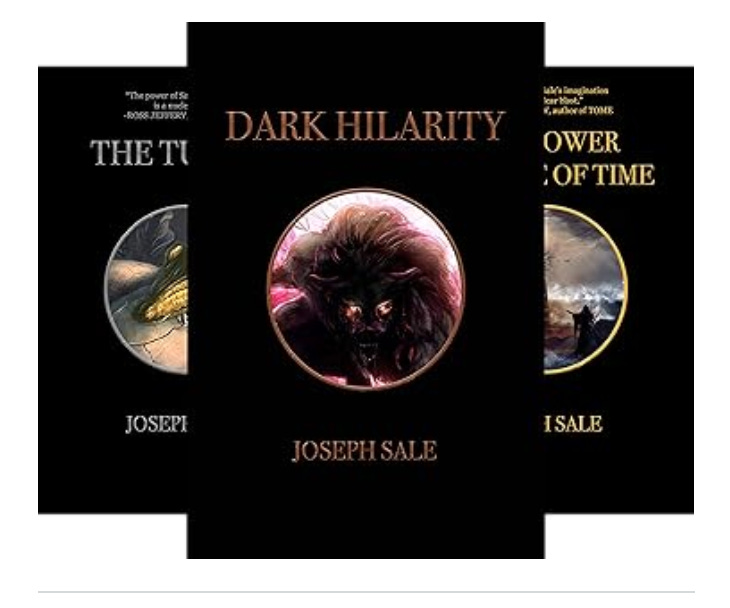
If you enjoyed this article, and would like to read a book that definitely uses a “soft” magic system, then why not check out my epic trilogy The Illuminad?
The Illuminad Trilogy is a fantasy-horror epic like no other. Described as “impressive as Clive Barker in his prime” by Brian Barr, author of Serpent King, and as “Unmissable” by Bram Stoker Award Nominated author Ross Jeffery, this story will take you on a journey to the horrifyingly beautiful land of Dae’eshta.
An excellent commentary - and I would add to it the comic book heroes which are all 'hard magic': their super-powers are very specific (excepting Batman, of course, who has none) and detailed. So we can get very exciting adventures and 'wow' moments, but they do not approach the sublimity of that deeper - soft - magic that you allude to in Tolkien. Good to reflect on this for those interested in how stories 'work' on the emotions.
Excellent treatment of this subject, and I'm truly flattered by the quotes! Like you, I'm much more impressed by soft magic, which is not to cast shade on hard magic for those who may prefer the aesthetic (and it does have some plot-related advantages, as you again very capably note).
Hope you and yours are well. Cheers!